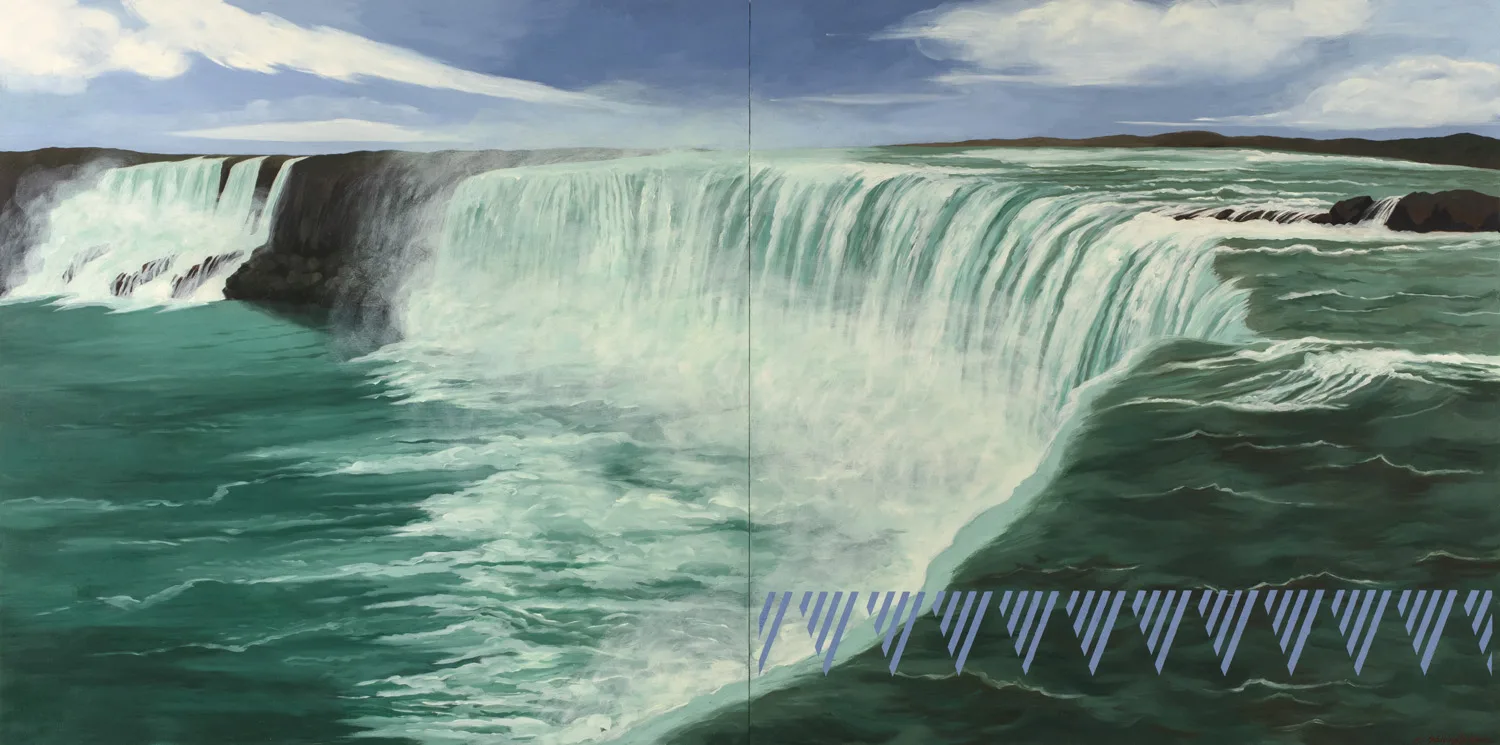
This exhibition showcases landscape paintings by the renowned, contemporary Cherokee artist Kay WalkingStick in conversation with classic works from The New York Historical’s collection of 19th-century Hudson River School paintings, including work by the illustrious painter Albert Bierstadt.
Highlights From the Exhibition
The exhibition spotlights how WalkingStick’s work connects to and diverges from the Hudson River School tradition and explores art’s role in shaping humankind’s relationship to the land. By examining and highlighting contemporary Indigenous art in the changing discourse of American art history, the exhibition celebrates a shared reverence for nature and galvanizes critical discussions on land dispossession and its reclamation by Indigenous peoples and nations.
Bringing Kay WalkingStick’s works to St. Petersburg allows our visitors to experience landscape paintings from a fresh, vital perspective. By pairing 19th-century Hudson River School works with contemporary Indigenous paintings, this exhibition prompts us to consider how lived experiences shape our perspectives of the land we share, and how it is represented in the American story.
Caitlin Pendola, Associate Curator
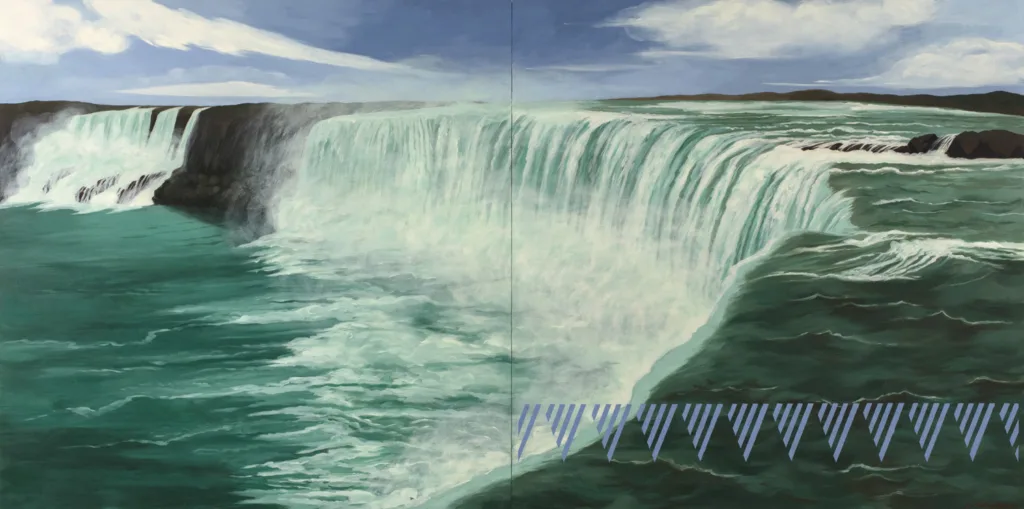
Showcasing WalkingStick’s work alongside both Euro-American and Indigenous traditions of art, the exhibition demonstrates the complex ways the artist contends with and interweaves these artistic lineages. Niagara is grouped with two paintings of the iconic waterfalls by Louisa Davis Minot (1788-1858), which are among the few known works by her hand and rare examples of early 19th-century landscape paintings by a Euro-American woman.
These works position WalkingStick within a lineage of women landscape painters in the Hudson River region while also considering the critical differences between the two artists’ approaches: Minot’s composition includes generic Indigenous figures to distinguish the site as North American, while WalkingStick uses a culturally specific Haudenosaunee pattern to mark the land as Indigenous.
About Kay WalkingStick
Kay WalkingStick (b. 1935, Syracuse, NY) is a citizen of the Cherokee Nation of Oklahoma with Cherokee/Anglo heritage. Her six-decade career is both a visual record of her life experience and her attempt to present Native American history as a crucial part of America’s history. She draws on formal modernist painting traditions as well as the Native American experience to create works that connect the immediacy of the physical world with the spiritual. Attempting to connect the present with the past, her complex works hold tensions between representational and abstract imagery. Her paintings represent a knowledge of the Earth and its sacred quality.
I hope viewers will leave the Museum with a renewed sense of how beautiful and precious our planet is. Also, that they depart with the realization that those of us living in the western hemisphere are all living on Indian Territory. These are certainly straightforward, even obvious, thoughts, but I believe they are concepts easily forgotten.
Kay WalkingStick
Exhibition Programming
Accompanying the artwork are informative and engaging programs allowing visitors to dive deeper into the exhibition.
November 5 & 6 | Exhibition Preview – see the exhibition during regular museum hours before it opens to the public!
November 6 | Exhibition Opening Reception
Every Tuesday & Saturday | Exhibition Guided Tours
November 8 | Native American Heritage Month Celebration
November 14 | Acrylic Painting Workshop: The Landscape of Home
Members are invited to an exclusive reception celebrating the opening of Kay WalkingStick / Hudson River School. Members can also preview the exhibition November 5 & 6 during regular museum hours. Free for members. Space is limited; advance registration required for the reception.
This exhibition has been organized by The New York Historical.
Major support for Kay WalkingStick / Hudson River School is provided by the Lily Auchincloss Foundation.
Special Thanks to Our Sponsor
Media Partner