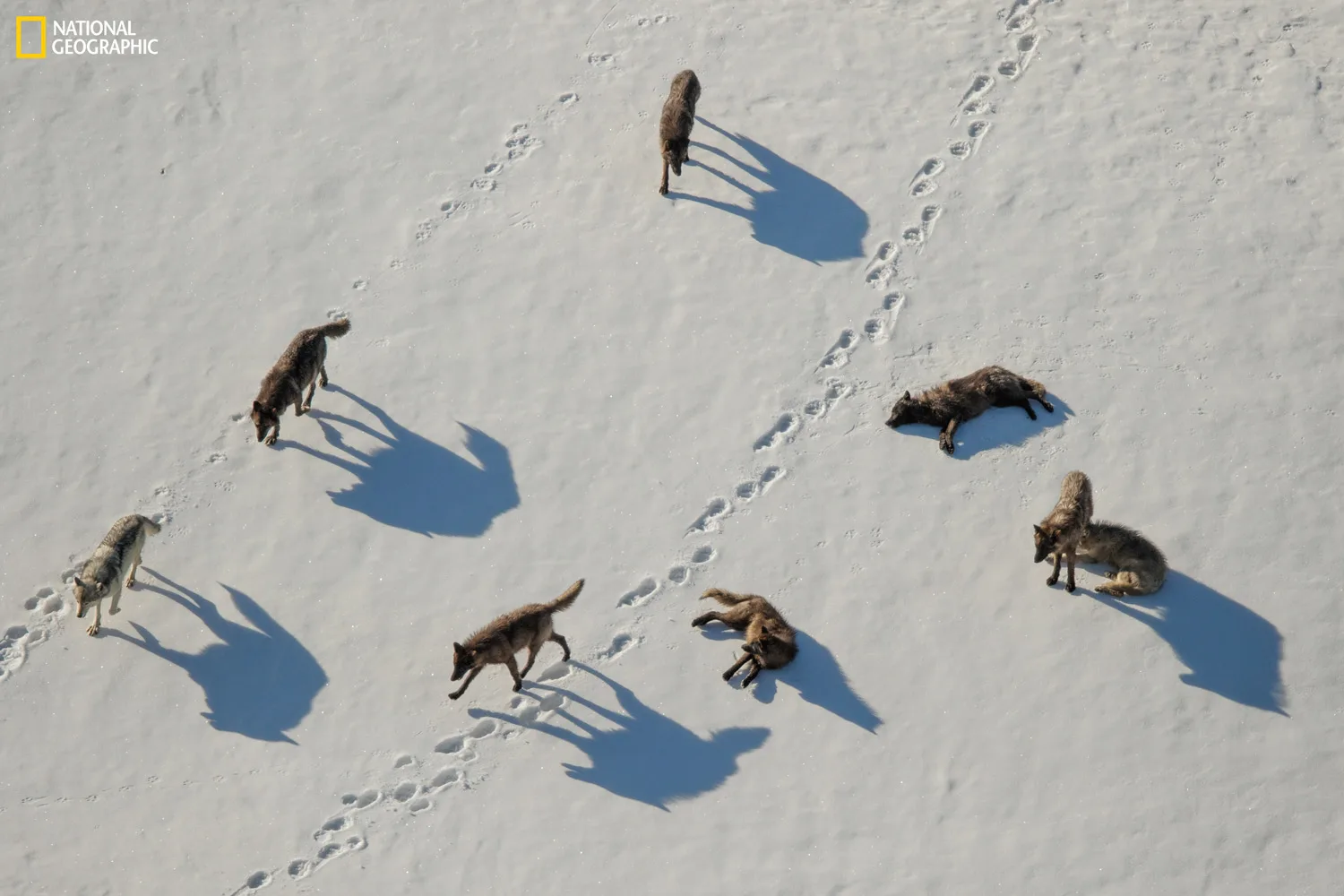
Created by the National Geographic Society and the National Museum of Wildlife Art, this exhibition will present stunning photography and videos of wild wolves living in two very different environments: the Greater Yellowstone Ecosystem in the American West and Ellesmere Island in the Canadian Arctic.
Highlights From the Exhibition
The two locations highlight the contrasting behaviors between wolves living in perceived competition with humans (Yellowstone) and wolves living without human intervention (Ellesmere). Since 2014, National Geographic Explorer and photographer Ronan Donovan has examined the relationship between wild wolves and humans in order to better understand the animals, our shared history, and what drives the persistent human-wolf conflict.
“The way that a culture views wolves can reveal a lot about how a society interacts with their environment—is there a belief of power over animals, or is there a collective shared landscape? As a visual storyteller, my goal is to portray my subjects in their most authentic way by showing the challenges they face as well as the tender moments between family members.”
Ronan Donovan, Photographer
As wolves in North America are increasingly under threat due to recent extreme wolf-control laws, and humans continue to impinge on the land and food sources that these animals need to survive, Donovan hopes that his photos will provide people with a better understanding of these often misunderstood animals. He also hopes they will see wolves as they are: powerful, intelligent, social mammals that have evolved to live in family structures similar to humans.
Watch Ronan Donovan’s Artist Talk at The James
Exhibition Programming
A series of informative and engaging programs offer visitors deeper insight into the exhibition. Space is limited; advance registration recommended.
May 8 | Exhibition Opening Reception
May 9 | Artist Talk: Ronan Donovan
May 12 | Homeschool Day: Wolves!
May 16 | Family Day: Wild About Wolves
August 15 | Menagerie at the Museum
May 9 | Free Educators’ Day
Members are invited to an exclusive reception celebrating the opening of Wolves: Photography by Ronan Donovan. Members can also preview the exhibition May 7–8 during regular museum hours. Free for members. Space is limited; advance registration required for the reception.

“Wolves: Photography by Ronan Donovan” is a traveling photography exhibit curated by The National Museum of Wildlife Art and the National Geographic Society.
Related Resources
Special Thanks to Our Sponsors
Sponsor

Sponsor

Sponsor

Media Partner