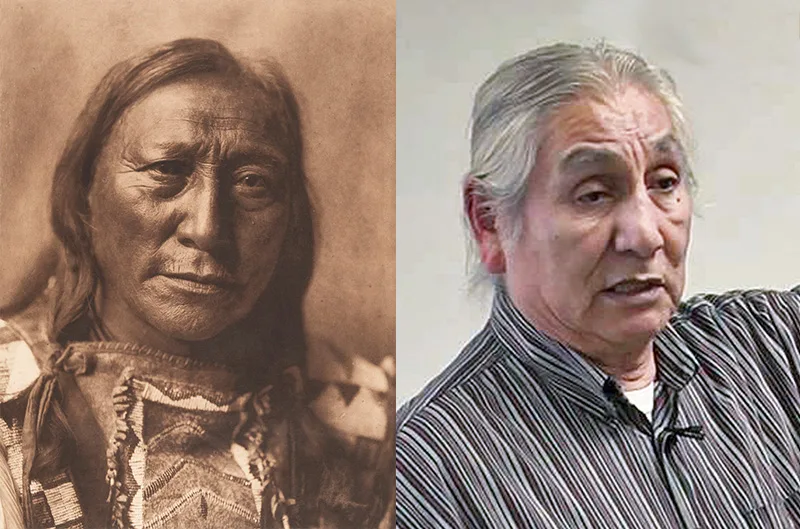
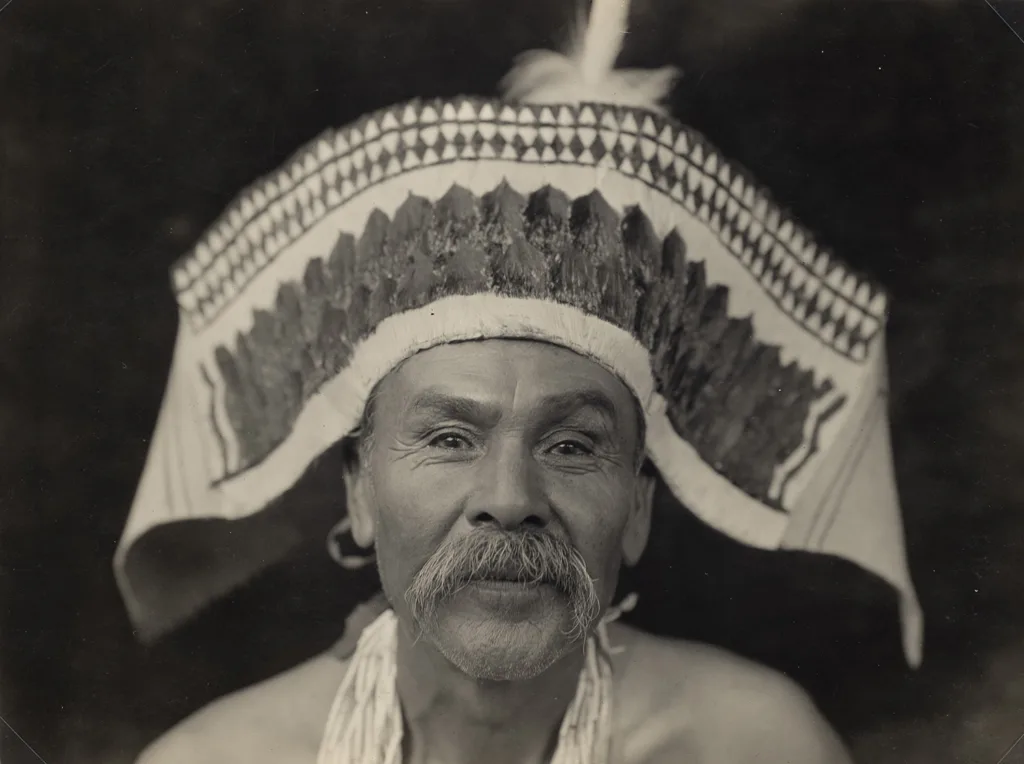
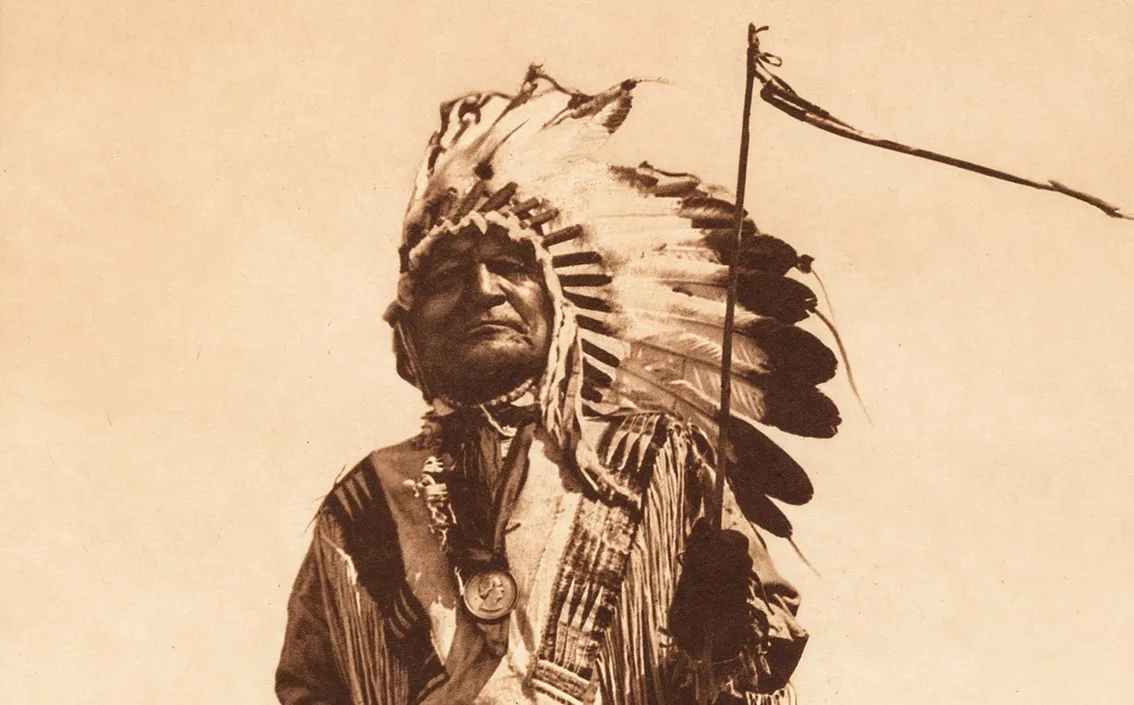
One photograph—recently included in the Portrait Gallery Installation of The James Museum’s Edward S. Curtis: Photographer of His Time exhibition—unexpectedly bridged the gap between historic photograph and living descendant, revealing one of those touching links to the past.
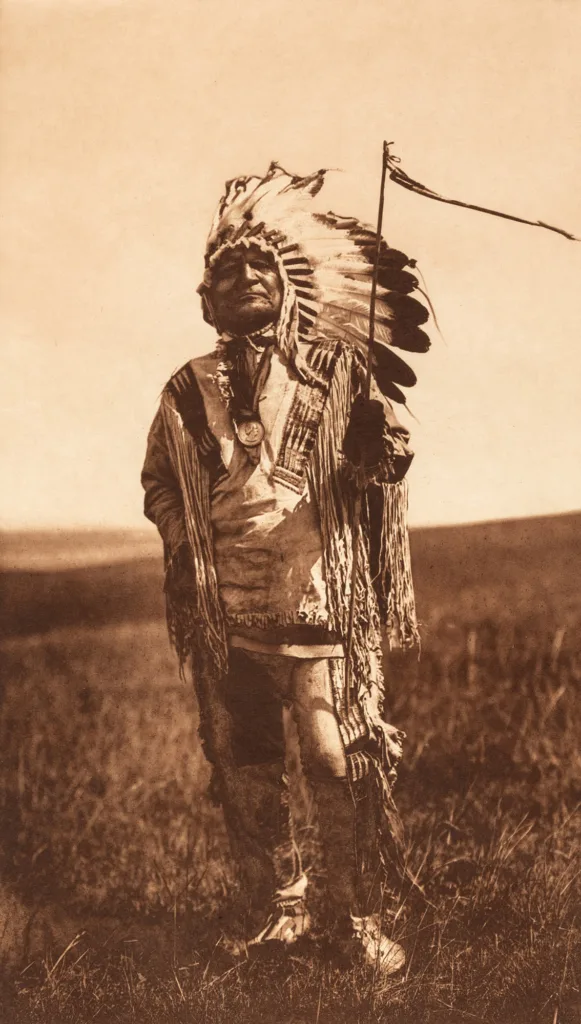
As I helped Associate Curator Caitlin Pendola select and research portraits to include in the exhibition, I was particularly struck by an image Curtis had titled Arikara Chief (c. 1908). The image is a full-body portrait of a Sahnish (Arikara) man wearing a feathered headdress and a fringed and porcupine-quilled buckskin shirt, leggings and moccasins. I suggested that we use the image and reached out to a Sahnish acquaintance—Loren Yellow Bird Sr.—who is a noted tribal historian, song-carrier, NPS Interpretive Specialist, and cultural consultant who worked as a Sahnish language and cultural advisor on the movie The Revenant (2015). I asked him if there was any information or appropriate cultural context he might be willing to share relating to the image. I was surprised when he responded that the man’s name was Kuunux wiit’ or “Sitting Bear” (c. 1841–1915), and that he was Loren’s great-great grandfather!
Having the privilege of Loren’s perspective added another layer to Curtis’s photograph. Loren told me that in addition to the information Sitting Bear provided to Curtis about his war-record, Sitting Bear was known among the Sahnish as an especially caring man and good leader who wanted the best for his community. He was a leader during times of intense transition and helped his people to navigate them as a chief, pastor and judge. When the community’s children were sent far away to Carlisle Indian Industrial School in Pennsylvania, Sitting Bear pushed to have them attend schools closer to their homes in North Dakota.
In another connection with Curtis, Loren said that he had the opportunity of visiting the archives at Indiana University to listen to the sound recordings of an honor song dedicated to Sitting Bear. The song was sung by Enemy Heart—a contemporary of Sitting Bear and a member of the Sahnish tribe—and had been recorded by Curtis on wax cylinders during his time researching among the Sahnish in North Dakota. As a song-carrier and descendent of Sitting Bear, Loren learned this song and can now pass it on.
By making connections with living descendants and communities linked to the Curtis images in our collections, we can facilitate the continuation of these stories and spread the significance of the individuals in these portraits to a wider audience. Our ongoing aim is to continue to identify the individuals that Curtis photographed, and to build our knowledge of them as we go. We are all linked to the past and to the future, and as a museum, part of what we do is to help make sure those human connections are felt by our visitors.