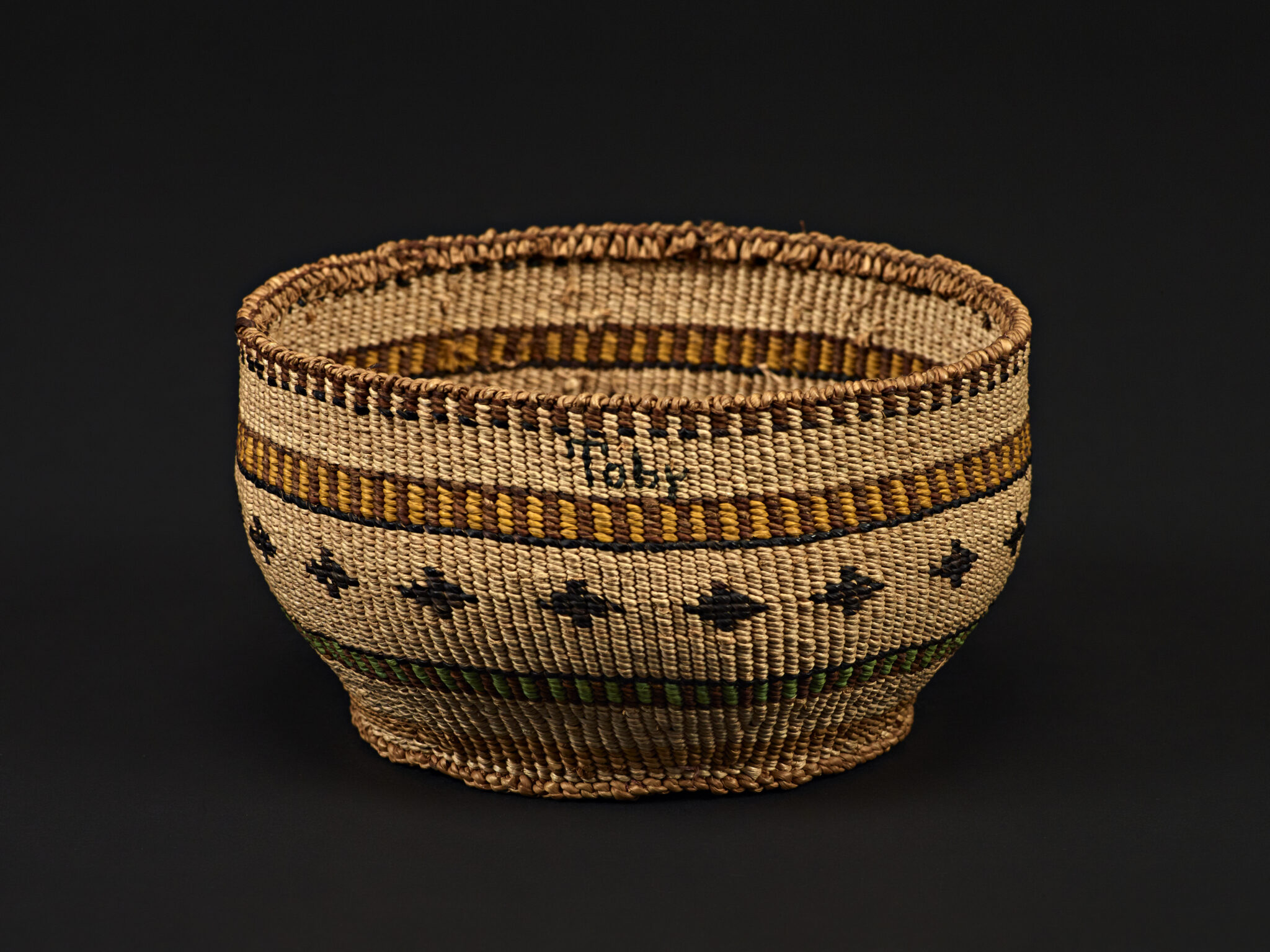
Rarely do basket-weavers sign their work. Between the years of 1880 and 1930, Native American baskets were a hot market item, leading to their preservation in private and public collections. However, due to a lack of records kept by early museums and collectors, identifying individual weavers is challenging. The James Museum is fortunate to hold in its collection a basket that, in a rare occurrence, was not only signed, but the weaver and date it was made are well documented.
Currently sitting on a shelf in the museum’s vault—not yet displayed— is a basket with the name “Toby” woven prominently into its side, a highly unusual feature. It was originally collected by William Coon during his travels while working for the Department of the Interior in the 1910s. While away, he wrote letters to his wife that were saved by the family for over a century. In one of the letters, dated 1916, Coon writes about commissioning a basket by the famed Toby Riddle (1848–1920). With this letter, we can say with certainty that this basket was made by Toby Riddle, a well-known Modoc woman who played a prominent role in the conflict now known as the Modoc War (1872–1873).
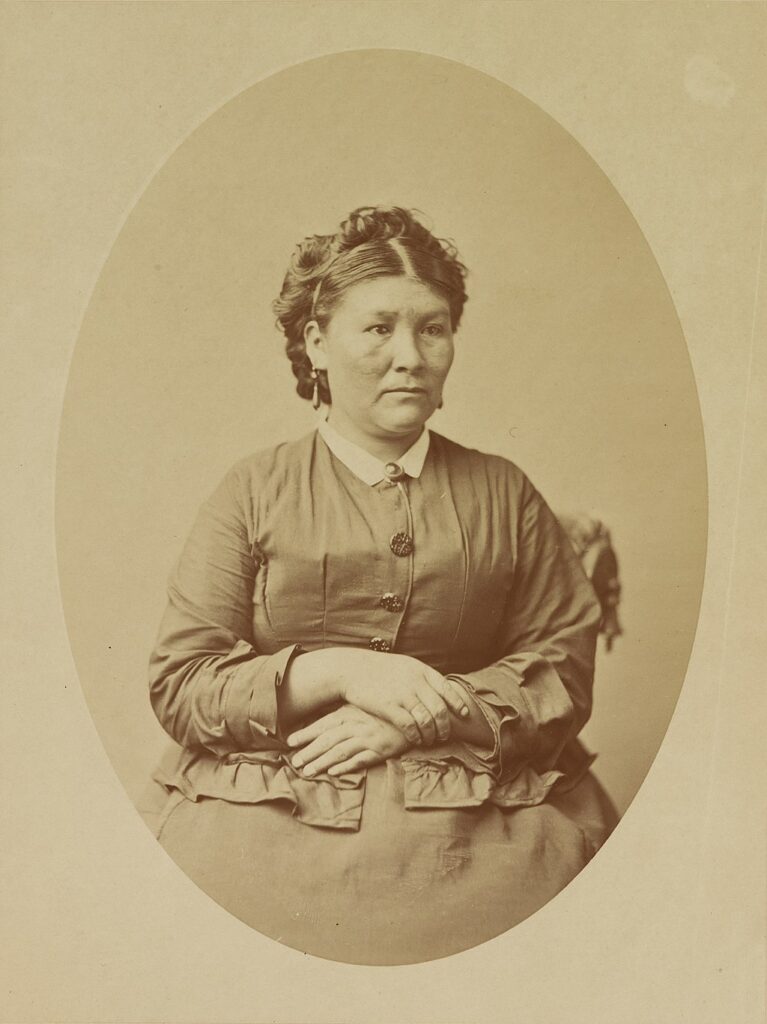
As a speaker of both English and the Modoc language, Toby and her husband, Frank, served as interpreters between U.S. officials and Modoc officials during the conflict. In summary, the Modoc War was a fight between the Modoc people—who were resisting U.S. efforts to force them back onto a reservation—and the U.S. Army, which sought to enforce federal relocation policies. The war captured the attention of the nation when U.S. Army General Edward Canby was killed by Chief Kintpuash (also known as Captain Jack) during peace negotiations.
According to firsthand accounts, Toby Riddle was aware of the Modoc’s plot to kill the U.S. officials. She warned Canby and the other peace commissioners about the Modoc’s plot, but her desperate pleas were dismissed. Not taking her warnings seriously, the men proceeded with the meeting as planned. Two of the three officials lost their lives. The third, Alfred B. Meacham, was saved by Toby, who persistently physically intervened during the attacks on him. She spent the next weeks nursing him back to health, and the two forged a lasting friendship.
Through sensationalized accounts of Toby’s role in the infamous war, she gained national notoriety, becoming a celebrity of the time. She and Meacham toured the country telling their tale. Weaving her name into the basket was not so much a signature, but more an autograph. Though she was not known for being a basket-weaver, as a Modoc woman she would have learned to weave at a young age. For Toby, weaving her autograph would have been a way to make extra income. For her fans, it created an impressive souvenir and conversational piece to bring home.
Thank you to the Gaston Estate for the generous donation from which this basket came.