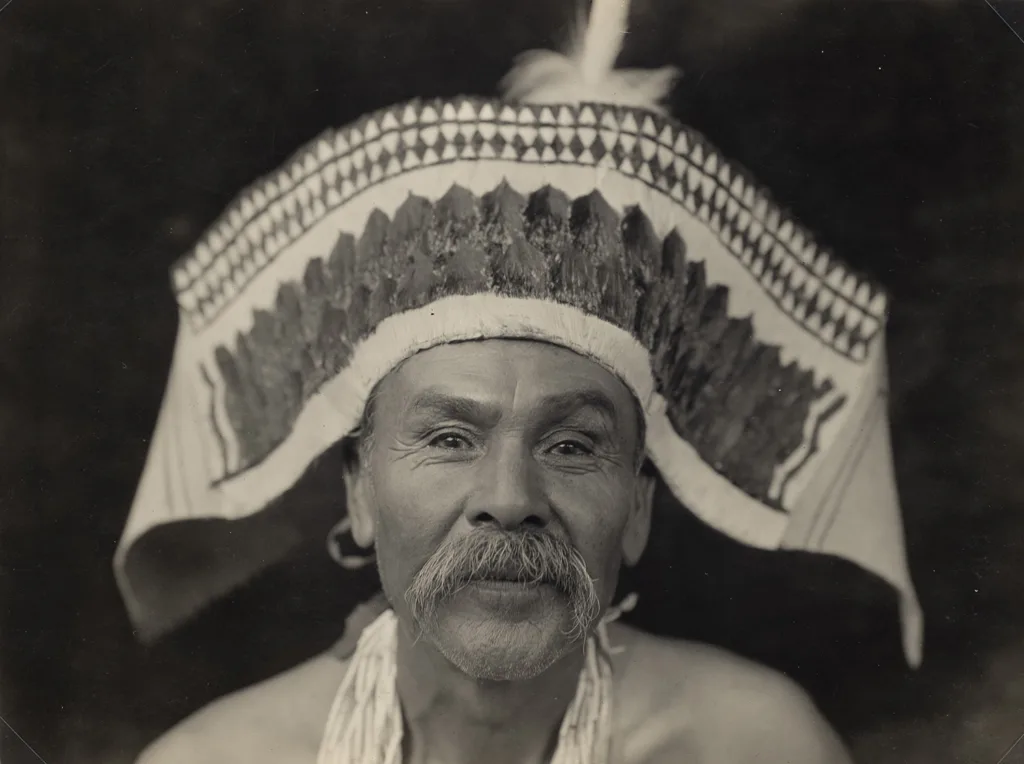
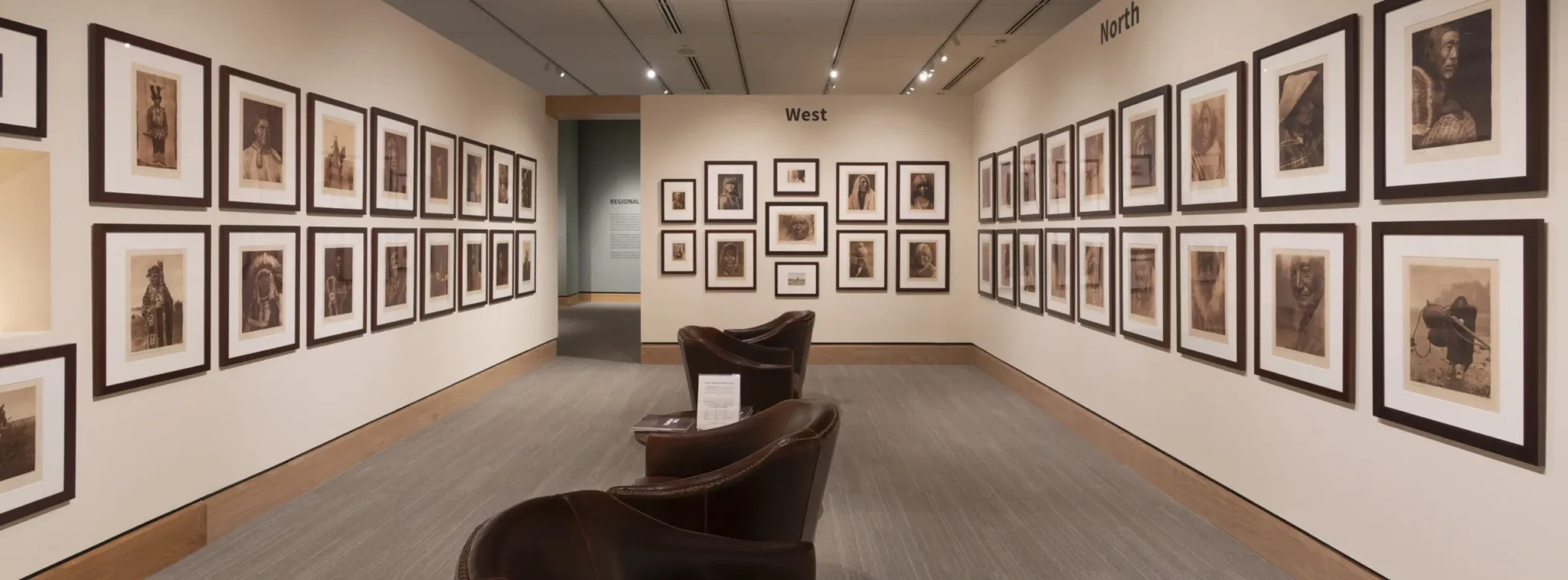
Power & Participation: Edward S. Curtis Portraiture presents 86 portraits—one representing each community the photographer visited. Curtis’s The North American Indian is often described as one of the most ambitious publishing projects in history. Less acknowledged is that it was among the largest participatory projects in the history of photography and ethnography—made possible through the hundreds or thousands of Indigenous individuals who participated in its creation.
This installation brings that collaboration into focus. Rather than positioning the sitters as bystanders in Curtis’s story, the installation reframes them as active participants with power, agency, and their own story to tell.
An interactive touchscreen offering interpretive content invites visitors to engage more deeply with each portrait. In some cases, detailed biographical information is known; in others, only limited details are known. Where gaps remain, the installation provides historical context to suggest what life may have been like for the person at the time the photograph was taken, while also emphasizing cultural continuity today.
The experience offers visitors a look into the diversity of Native North American cultures, and an opportunity to reflect on the subject’s individuality, their role in history, and why they may have been interested in sharing their likeness for future generations.
Additionally, the exhibit is its own participatory project, allowing guests to share information they may know about the people pictured as part of a collaborative research initiative.
The Photographer
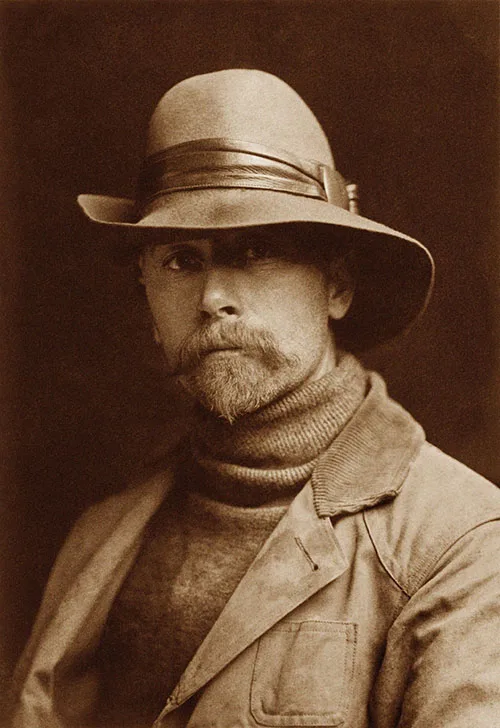
Edward S. Curtis (1868–1952) was an American photographer who dedicated his life to documenting Native American communities in the early twentieth century. His encyclopedic, 20-volume publication titled The North American Indian, for which almost all his 40,000 photographs were taken, is known as the most ambitious project of its kind.
His iconic images continue to influence how Indigenous cultures are viewed, prompting important questions about representation, art and cultural authority.
The Research Initiative
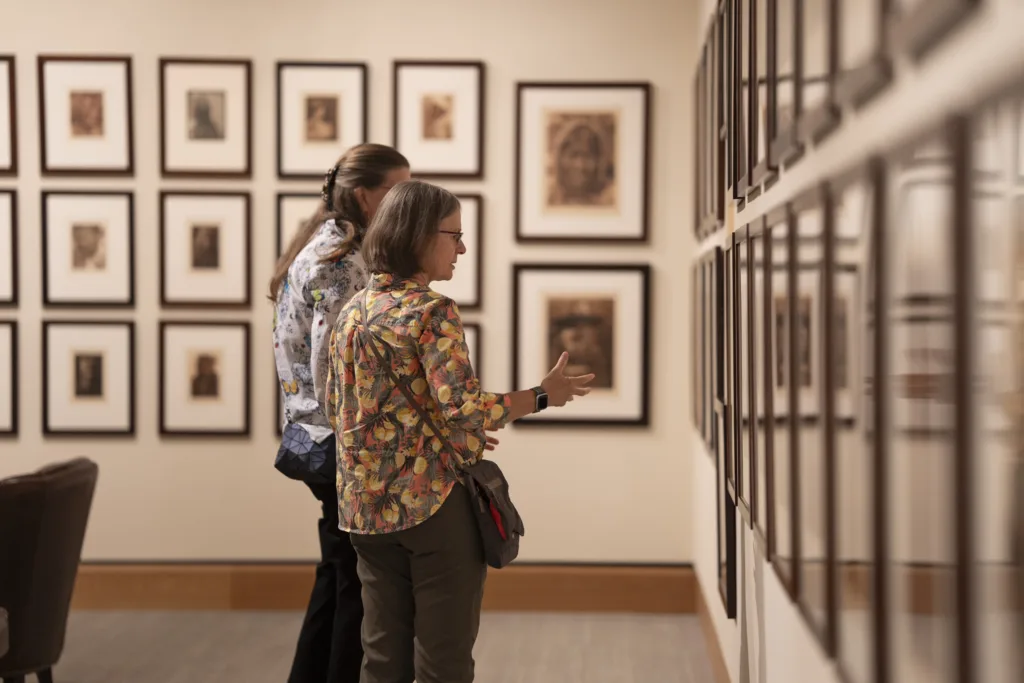
This installation is supported by an ongoing research initiative led by The James Museum, dedicated to identifying the individuals photographed by Curtis. A QR code within the installation connects visitors to a platform where they may contribute names, biographical details and cultural context related to the portraits.
This crowdsourced approach allows new information to be incorporated as the installation travels, enabling it to evolve in real time. The initiative will continue beyond the exhibition’s run, reinforcing the museum’s long-term commitment to collaboration, scholarship and Indigenous voices.
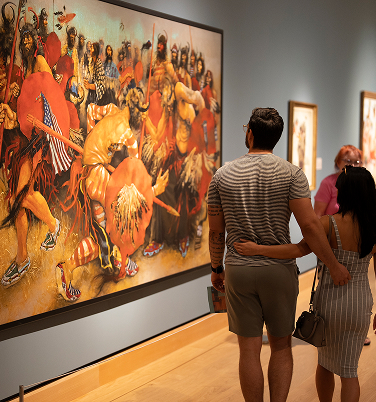
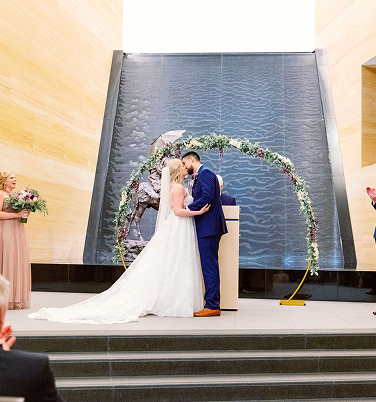
Installation Images from The James Museum
Sample Content
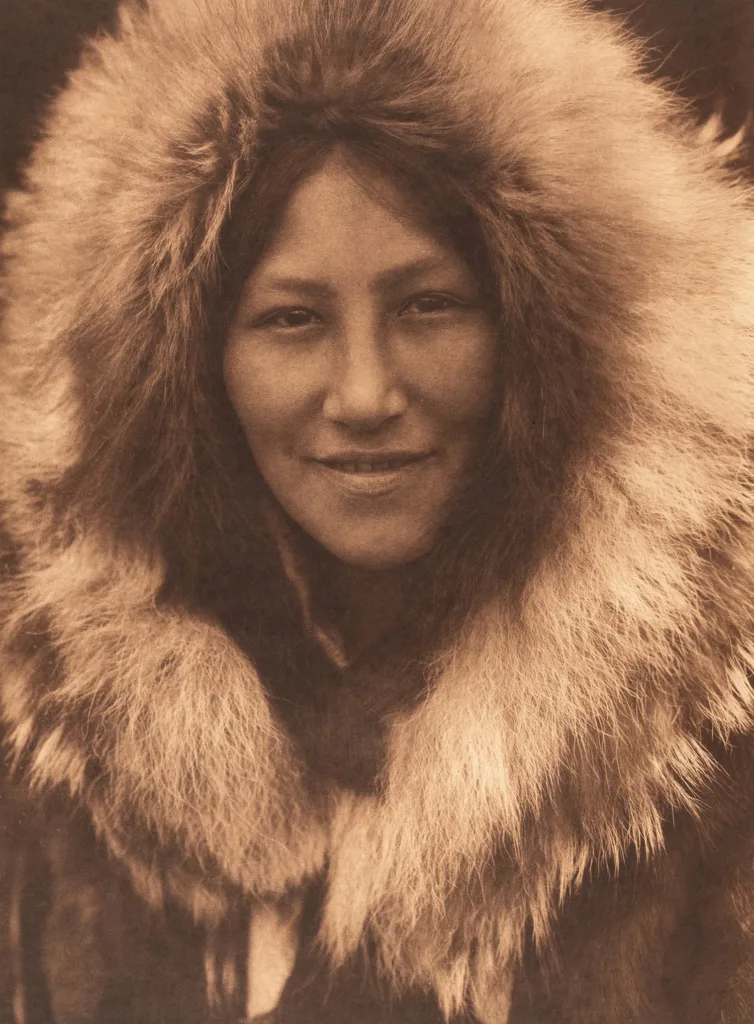
Pictured here is Óla Nashoalook. Her granddaughter is alive today and provided this statement to the museum about her grandmother:
My grandmother Ola Nashoalook was a strong, kind, and thoughtful person. Although she passed before I was born, our village tells stories about her.
The picture was taken while my grandparents were on the trail. They were subsistence livers and my grandfather would travel to other villages when he heard that they needed help. This particular picture was taken during their subsistence season. While hunting or fishing, they would visit various villages throughout the region. This was when they encountered Edward Curtis. Since my grandfather was the last traditional chief, I would presume that the villagers looked to my grandfather Joe and my beautiful grandmother to have their photo taken. Many said that she was a beautiful soul who cared deeply for others.
—Dr. Liz Ross, 2025
Edward S. Curtis, American, 1868–1952
Óla – Noatak
1927/1930
Photogravure
Gift of Robb and Susan Hough, 2021.2.20.29
Exhibition Specifications
86
The James Museum of Western & Wildlife Art, St. Petersburg, FL, USA
3 venues, 2028–2029
Designed to be a salon-style installation in a small gallery or along one or two uninterrupted walls to create a dense, immersive experience. All works should be visible standing in one place while within the exhibit. A power source is needed. Venues will be required to get layout approval by the exhibition curator.
Flexible, with a minimum of 110 linear feet when installed 2–3 framed photographs high.
Installation includes hardware pre-loaded with the interpretive, interactive digital content.
For loan and crating/shipping fees please contact Caitlin Pendola, Associate Curator at caitlin.pendola@thejamesmuseum.org or 727-892-4200, ext. 1028
Curators
Caitlin Pendola is the lead curator of the installation and Associate Curator at The James Museum. Caitlin has been studying the Edward S. Curtis collection at The James Museum for seven years and has curated three exhibitions sourced from the collection.
Ernest Gendron (Wôbanaki/Nakoda) is the co-curator of the installation and Manager of Adult Learning at The James Museum. Ernest is an authority on Plains Indian art and culture and has spent more than a year studying the Edward S. Curtis collection.
Together, they have worked to respectfully gather and share information about the individuals featured in these Edward Curtis photographs. The curators reached out to Tribal nations and community members for comment, information and cultural context. When feedback was received, it was incorporated. Their work continues.
The Robb & Susan Hough Collection of Edward S. Curtis Photography
The Robb & Susan Hough Collection of Edward S. Curtis Photography at The James Museum of Western & Wildlife Art in St. Petersburg, Florida features over 1,500 photographic works, including rare masterworks such as glass goldtone prints, large platinum prints, unpublished prints, and goldtone printing-out-paper prints.
The collection also comprises a complete set of the 20 portfolios from “The North American Indian,” each containing approximately 35 photogravures. It is one of the most significant and well-maintained assemblage of Edward Curtis’s photography in the world.