
The James Museum To Open Ronan Donovan’s “Wolves” Exhibition on May 9
FOR IMMEDIATE RELEASE
Stephanie Adamo
Director of Marketing
727.892.4200 ext.1037
stephanie.adamo@thejamesmuseum.org
Sarah Richardson
Communications Associate
727.892.4200 ext.1025
sarah.richardson@thejamesmuseum.org
The James Museum To Open Ronan Donovan’s
Wolves Exhibition on May 9
The traveling exhibition by the National Geographic Society and National Museum of Wildlife Art features the impactful work of National Geographic Explorer and photographer Ronan Donovan
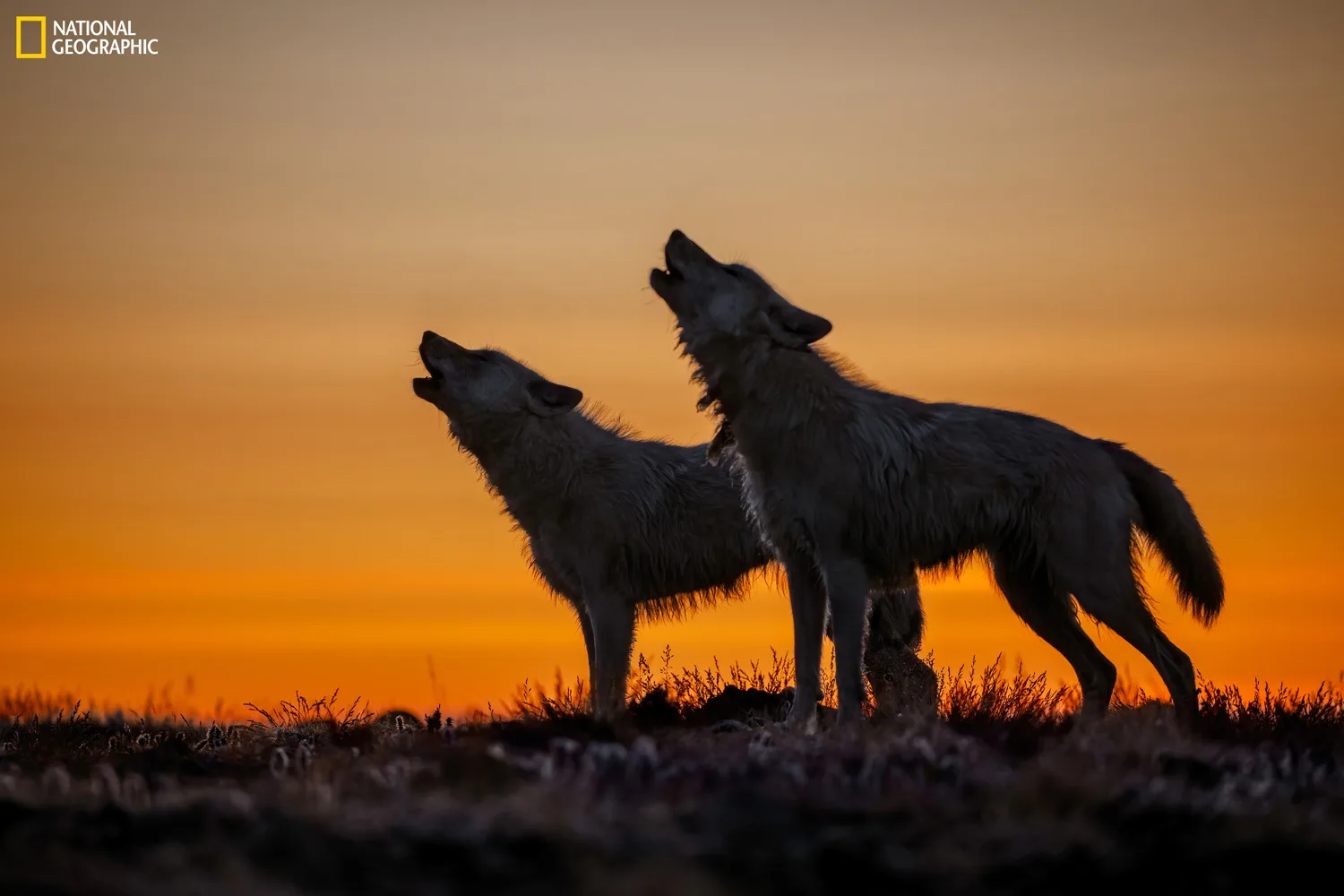
April 17, 2026 – St. Petersburg, FL – On May 9, The James Museum of Western & Wildlife Art will debut the traveling photography exhibition Wolves, featuring Ronan Donovan’s stunning images and videos of wild wolves in the Greater Yellowstone Ecosystem and Ellesmere Island in the high Canadian Arctic. Since 2014, National Geographic Explorer and photographer Ronan Donovan has examined the relationship between wild wolves and humans in order to better understand the animals, our shared history, and what drives the persistent human-wolf conflict.
The exhibition, created by National Geographic Society and the National Museum of Wildlife Art, will display images and videos—highlighting the contrast between wolves that live in perceived competition with humans and wolves that live without human intervention.
Wolves will introduce visitors to the daily lives of wolves in the Arctic—how they hunt, play, travel, and rest in one of the harshest environments on Earth—with unparalleled intimacy. By contrast, the wolves of the Greater Yellowstone Ecosystem are fearful of humans, making it nearly impossible to document their daily lives. One of the distinctions made clear in the images is the ability to see wolf pups in the Arctic, which allowed Donovan to document behaviors he had never seen in Yellowstone. Donovan attributes these differences to the fact that Arctic wolves rarely experience negative encounters with humans or view them as a threat—it’s like going back to a time when humans learned from wolves and subsisted on the same prey.
“Wolves are such a fascinating animal to me because of how complex their relationship is with humans,” Donovan says. “Wolves were the first animals humans domesticated some 30,000 years ago and they have lived alongside us ever since as guardians, workers, and companions. Yet as humans moved to more sedentary lives, raising what amounts to easy prey in the form of livestock, wolves have found themselves in conflict with humans.”
As wolves in North America are increasingly under threat due to recent extreme wolf-control laws, and humans continue to impinge on the land and food sources that these animals need to survive, Donovan hopes that his photos will provide people with a better understanding of these often misunderstood animals. He also hopes they will see wolves as they are: powerful, intelligent, social mammals that have evolved to live in family structures similar to humans.
“The way that a culture views wolves can reveal a lot about how a society interacts with their environment—is there a belief of power over animals, or is there a collective shared landscape?” Donovan says. “As a visual storyteller, my goal is to portray my subjects in their most authentic way by showing the challenges they face as well as the tender moments between family members in order to evoke a shared emotion that the viewer can connect with.”
“In this exhibition, visitors will take an intimate look into the lesser-known lives of wild wolves and examine their relationship with humans through Ronan’s lens,” said Emily Dunham, chief campus and experiences officer at the National Geographic Society. “Ronan’s stunning images dispel the misconceptions that drive human-wildlife conflict and provide insight into how we might coexist together. We hope visitors walk away with a better understanding of the past, present and future of wolves.”
“This exhibition is as much a study of human nature as it is a look at the wild. Ronan Donovan’s lens provides a rare, non-adversarial perspective on one of the world’s most misunderstood predators, offering our visitors an essential starting point for a conversation on what it truly means to coexist with the world around us,” said Emily Kapes, Chief Curator of The James Museum. “It is a profound experience for families to share, giving parents and children alike a chance to marvel at the social bonds and family structures of wolves that mirror our own.”
Accompanying the artwork are informative and engaging programs allowing visitors to dive deeper into the exhibition. Programs include:
MEMBER EXCLUSIVES
May 8 | Exhibition Opening Reception
ADULT PROGRAMS
May 9 | Artist Talk: Ronan Donovan
YOUTH & FAMILY PROGRAMS
May 12 | Homeschool Day: Wolves!
May 16 | Family Day: Wild About Wolves
August 15 | Menagerie at the Museum
EDUCATORS
May 9 | Free Educators’ Day
For more information on all of The James Museum special exhibitions and related events, visit thejamesmuseum.org/special-exhibitions and follow the museum on Instagram and Facebook for sneak peeks and behind-the-scenes looks at each exhibition.
Key Takeaways:
- Global Photography & Cinematic Media: Wolves features the immersive work of National Geographic Explorer Ronan Donovan, showcasing high-definition photography and video from the Greater Yellowstone Ecosystem and the high Canadian Arctic.
- A Tale of Two Packs: The exhibition highlights the striking contrast between the fearful, elusive wolves of Yellowstone, who live in perceived competition with humans, and the wolves of the Arctic, who have had little to no human contact.
- Challenging the Predator Myth: Beyond stunning visuals, the exhibition serves as a social study, revealing the complex family structures and social intelligence of wolves to help dispel long-held misconceptions and human-wildlife conflict.
- Shared Human Connection: By documenting rare behaviors, like wolf pups playing in the Arctic, Donovan invites visitors to see a reflection of our own history, back to a time when humans and wolves shared a landscape as mutual hunters and companions.
- Intergenerational Appeal: Designed as an educational hub for all ages, the exhibition encourages families to explore the theme of coexistence, offering a bridge between wildlife conservation and our local community’s relationship with the natural world.
####
About Ronan Donovan
A field biologist turned conservation photographer and filmmaker, Ronan Donovan has explored the human relationship to nature and wildlife on all seven continents. Donovan’s passion for conserving wild animals and wild places was ignited as a child growing up in Vermont and later during his years as a wildlife field biologist researching spotted owls and chimpanzees. He transitioned to visual storytelling as a way to amplify the wildlife researchers and conservationists that Donovan collaborated with. In addition to his National Geographic work on wolves, Donovan has documented human-chimpanzee conflicts in Uganda, and the legacy work of primatologist Dian Fossey focused on mountain gorillas in Volcanoes National Park, Rwanda. Donovan strives to reconnect viewers to the natural world through the lives of our fellow social mammals to highlight our shared past and interwoven future.
About The James Museum of Western & Wildlife Art
The James Museum of Western & Wildlife Art provides experiences that inspire human connection and transformation through art depicting the peoples, landscapes, and history of the American West, and wildlife of the world. More than 400 premier works of art including sculpture, paintings and jewelry are on display in the museum’s 26,000 square feet of gallery space. The museum engages the community through programs and educational opportunities, for all ages, that bring our history to life and amplify voices that are not often at the forefront of mainstream Western art. When The James Museum opened in April 2018 it became one of the newest additions to St. Petersburg’s thriving arts community.